
As we move into 2026, the uses for cleanrooms continue to expand across industries—and the expectations are higher than ever. Today’s facilities are expected to be cleaner, faster to deploy, easier to adapt, and more efficient to operate. The best cleanroom plans focus on the practical reality: controlling particles (and often moisture), maintaining consistent airflow and pressure, and supporting compliance without creating unnecessary downtime. Modular systems are especially relevant because they’re designed for speed, scalability, and validated performance.
1. Pharmaceuticals, Biotechnology & Sterile Compounding
One of the most enduring uses for cleanrooms is pharmaceutical and biotech production, including sterile workflows. Contamination control is critical for research, formulation, and controlled handling, and requirements often call for ISO-rated environments. Modular Cleanrooms supports regulated environments with modular hardwall and softwall cleanroom solutions, along with design services that help match airflow, filtration, and layout to the process needs.
2. Semiconductor, Electronics & Precision Assembly
Another major area for uses for cleanrooms is electronics—especially where micro-scale particles can damage yields. As components get smaller and tolerances tighten, airborne control becomes less optional and more foundational. Cleanroom technologies are also a fast-growing market overall in 2026, driven in part by high-purity manufacturing like electronics and life sciences.
3. Aerospace, Defense & Sensitive Equipment Manufacturing
High-precision assembly and testing for aerospace components, optics, and defense applications are also key uses for cleanrooms. These environments help reduce rework and protect sensitive assemblies from particulate contamination during build, inspection, and packaging steps.
4. Data Centers & Server Room Enclosures
An emerging set of uses for cleanrooms includes protecting high-value electronics and server hardware. Even when a facility isn’t built to a traditional ISO classification, “clean air” enclosures can help reduce dust-driven failures, protect sensitive components, and support reliability in mission-critical environments.
5. Lithium-Ion Battery Production and Dry Rooms
As EV and energy storage production ramps, one of the fastest-growing uses for cleanrooms involves battery manufacturing—often paired with “dry room” requirements. Dry rooms are designed to maintain extremely low moisture levels because many battery materials are moisture-sensitive; industry guidance commonly references very low dewpoints (often around -30°C dewpoint or lower) to achieve extremely low relative humidity at room temperature.
6. Sustainability-Driven Facilities and Efficient Builds
Sustainability is becoming more central to the industry, especially when organizations are trying to reduce construction waste and limit operational energy load. Modular construction is often selected specifically because pre-engineered systems can reduce on-site variability and speed installation compared to traditional builds—some engineering and industry sources describe modular installs as roughly 20–30% faster in many scenarios.
7. Smart Monitoring and Connected Operations
The newest uses for cleanrooms are increasingly tied to smarter operations: continuous monitoring, trending, and faster response when conditions drift. Instead of relying only on periodic checks, many facilities are moving toward real-time visibility for pressure, temperature, humidity, and airborne particle performance—especially where uptime and audit-readiness matter. (Even if your room is not “fully automated,” basic monitoring can help prevent expensive surprises.)
Why Choose Modular Cleanrooms?
- 40+ Years of Expertise
Modular Cleanrooms, Inc. has been delivering custom hardwall and softwall solutions since 1994, serving p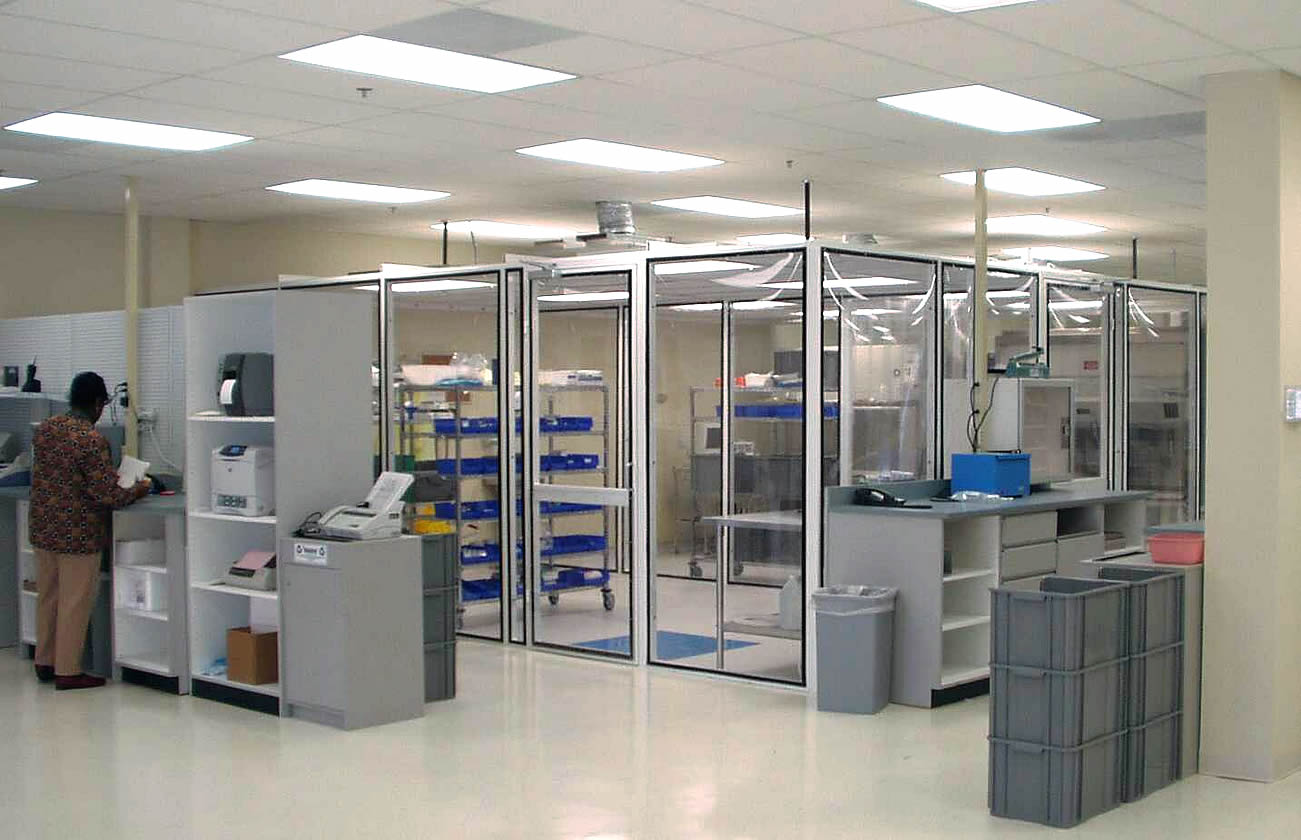 harmaceutical, aerospace, electronics, optics, and military clients.
 - Tailored Hardwall and Softwall Options
Hardwall cleanrooms suit stringent air quality needs like pharmaceuticals and electronics; softwall options provide affordable, flexible solutions for less critical or temporary applications. - Fast, Cost-Efficient Builds
Prefabricated modules mean faster assembly, lower disruption, and greater cost-efficiency—often reducing timelines and budget by ~30% versus traditional builds. - Compliance-Ready Designs
All modular solutions are designed for ISO and GMP compliance, supporting rapid validation for industries with tight regulatory oversight. - Sustainability and Innovation
Modular Cleanrooms embraces sustainable materials, energy-saving designs, and advanced monitoring technologies that align with evolving cleanroom trends.
Precision Starts with the Right Environment
The uses for cleanrooms in 2026 are broader—and more operationally demanding—than even a year ago. Whether you’re focused on sterile workflows, precision manufacturing, dry-room moisture control, or better reliability for sensitive equipment, the right cleanroom strategy starts by matching the environment to the process. Modular systems help teams move faster today while staying flexible for whatever comes next.