
An effective ESD cleanroom (Electrostatic Discharge) does more than meet particle count requirements. In environments where electronics, powders, plastics, or sensitive components are handled, electrostatic discharge can quietly undermine both product quality and contamination control. Static electricity can attract airborne particles, disrupt material flow, and damage delicate components, making ESD management a critical part of cleanroom performance. For this reason, an ESD cleanroom must be intentionally planned to control static alongside airflow, humidity, and workflow.
At Modular Cleanrooms, this design is approached as part of a complete system—one that integrates environmental stability, material selection, and layout planning to support consistent, contamination-controlled operations.
Why Static Electricity Is a Risk
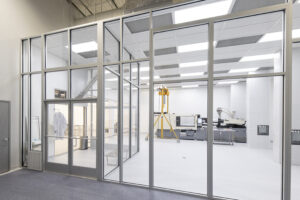
Static electricity builds easily in clean environments. Low humidity, high airflow, synthetic materials, and constant movement all contribute to charge buildup. In an ESD cleanroom, this can create two major problems: damage to sensitive products and increased contamination risk.
In electronics manufacturing, electrostatic discharge can cause immediate failure or latent defects that are difficult to detect. In powder handling, static can interfere with flow rates, cause clumping, and pull particles toward surfaces and products. Even packaging materials and plastic components can hold static charges that attract contaminants, reducing yield and consistency. Because many controlled environments operate on the drier side, a cleanroom should be designed with static behavior in mind from the very start.
Humidity Control in an ESD Cleanroom
Humidity plays a central role in cleanroom performance. Extremely dry air increases static buildup, while unstable humidity can introduce variability into sensitive processes. Maintaining a controlled relative humidity range helps dissipate static charges before they become disruptive.
Modular Cleanrooms integrates humidity and environmental planning into the overall cleanroom strategy so you can reduce static risk without compromising ISO cleanliness. A well-controlled ESD cleanroom supports repeatable outcomes, especially when a process involves powders, films, or delicate electronic components that react quickly to environmental changes.
Flooring, Footwear, and Grounding Strategies
In many facilities, static problems happen where people and equipment make contact with surfaces. A strong ESD cleanroom strategy accounts for those “everyday” touchpoints and makes static dissipation part of normal movement and workflow.
Here are the most common control elements that work together:
- Static-dissipative flooring that is cleanable and compatible with controlled environments
- ESD footwear or heel grounders that maintain grounding while moving through the space
- Bonded and grounded workstations and equipment to prevent charge accumulation during handling
- Grounded carts and mobile tools to reduce static during transport and staging
These features are most effective when built into the cleanroom layout early rather than added later as patchwork solutions.
Materials and Workstation Design
Material selection matters because some plastics, foams, and coatings can generate or hold static charges. Choosing low-charging, static-dissipative materials for tools, furniture, and surfaces helps reduce particle attraction and keeps the ESD cleanroom more stable over time. Workstations may also incorporate ionization in areas where grounding alone is not enough, particularly when insulating materials must be used for the process.
Integrating Control into Cleanroom Layout
The most successful ESD cleanroom environments treat static control as part of the overall layout strategy. Where people stand, where carts move, and where materials are transferred can all influence static behavior. Poorly planned pathways can create static “hotspots,” even when the room meets cleanliness targets.
A practical way to think about the layout is to plan around three movement patterns:
- Personnel flow: gowning entry, work zones, and exits that avoid unnecessary backtracking
- Material flow: controlled transfer points that limit exposure and handling steps
- Equipment flow: carts and tools routed to reduce friction-heavy travel through critical zones
Modular Cleanrooms integrates airflow planning, workstation placement, and environmental control early so layout decisions support both contamination control and ESD performance.
Built for Reliable Performance Over Time
An ESD cleanroom is most effective when electrostatic control is engineered into the environment—not managed through constant workarounds. By addressing humidity, flooring, grounding, materials, and layout together, facilities can protect sensitive products, reduce contamination risk, and improve long-term reliability. With Modular Cleanrooms, we design around real operational needs, supporting performance today while staying adaptable as your process evolves.