
Cleanroom testing is an important part of keeping a controlled environment performing the way it was designed. Changes in airflow, filtration, pressure, or particle levels can affect performance even when a space looks clean. Routine cleanroom certification helps verify that the environment continues to meet the requirements established for the process, product, or industry.
What Does Cleanroom Testing Include?
Cleanroom testing looks at several conditions that influence environmental control. The exact tests depend on the room design, classification, and application, but the goal is the same: confirm that the space is operating within its specified limits.
At Modular Cleanrooms, we provide testing services that include particle counts, air velocity measurements, static pressure checks, filter face scans, airflow pattern evaluations, recovery testing, and measurements for temperature, humidity, light, and sound.
Particle counting is especially important because ISO classifications are based on airborne particle concentration. Air velocity and pressure measurements can also show whether filtered air is moving through the space as intended and whether pressure relationships between adjacent areas are being maintained.
How Often Should Testing Be Performed?
There is not one cleanroom testing schedule that works for every facility. Testing frequency can depend on classification, process sensitivity, internal quality procedures, customer expectations, monitoring results, and any industry-specific requirements that apply.
Periodic classification is often performed on a recurring schedule, but the appropriate interval should be based on the needs and risks of the controlled environment. A space with stable monitoring results and established procedures may have different requirements than one supporting highly sensitive production.
5 Times Additional Testing May Be Needed
Scheduled cleanroom testing is only part of maintaining consistent performance. Certain changes can affect airflow, filtration,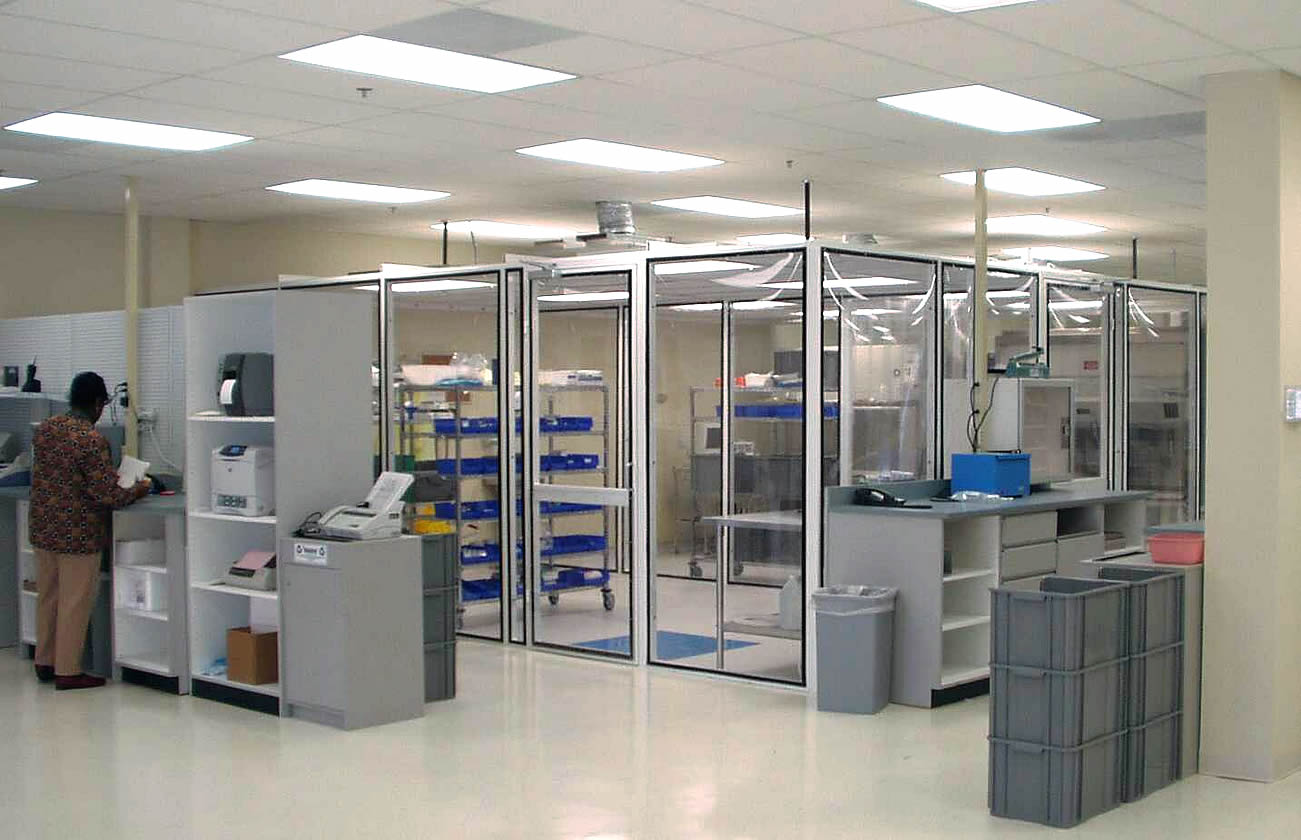 pressure, or contamination control.
Additional testing may be appropriate:
- After HEPA filter service or replacement to confirm filtration performance.
- Following HVAC or airflow adjustments that could change how air moves through the space.
- After a room expansion or reconfiguration that alters the original layout.
- When new process equipment is installed and may affect airflow or particle generation.
- After unexpected particle counts or contamination concerns that suggest conditions have changed.
Testing after a significant change helps verify that the space is still operating as intended before normal production continues.
What Is Checked During Certification?
Depending on the environment, it may include several different measurements:
- Particle counts: Measure airborne particles at designated locations.
- Air velocity: Checks how quickly filtered air is moving into the space.
- Static pressure: Evaluates pressure differences and resistance across filters.
- Filter face scans: Help identify potential leaks or filtration concerns.
- Recovery testing: Measures how quickly the room returns to acceptable conditions after particle levels increase.
- Temperature and humidity: Confirm that environmental conditions remain within desired ranges.
Together, these cleanroom testing methods provide a more complete view of performance than particle counts alone.
Why Routine Monitoring Matters Between Certifications
Formal cleanroom certification gives facility teams a snapshot of performance at a particular time, but conditions can still change between scheduled visits. Routine monitoring can help identify shifts in particle levels, pressure, temperature, humidity, and other important conditions.
When results move outside their normal range, early detection can make it easier to investigate filtration, airflow, equipment, or operating practices before the issue becomes more disruptive.
Keep Your Controlled Environment Performing as Designed
Cleanroom testing helps confirm that filtration, airflow, pressure, and environmental conditions continue to support the intended application. The right schedule depends on classification, process risk, monitoring data, and applicable industry or customer requirements.
At Modular Cleanrooms, we offer particle monitoring and cleanroom certification services along with testing for velocity, static pressure, filter performance, recovery, temperature, humidity, light, and sound. Regular evaluation gives facility teams the information they need to maintain consistent performance and make better-informed maintenance decisions.